Gemini 4 Carbon hands-on: turning complex tasks into working artifacts
Official MKA results, API pricing and 3D examples meet five TOKRACE tasks: an exploded handheld, underwater laundromat, webpage, chart and image differences, with videos and source projects.
Updated: 2026-11-17
TOKRACE · 2026-11-17 · Official data and hands-on work
Google positions Gemini 4 Carbon for complex engineering and sustained workflows. Our five tasks show concrete delivery: assembled and exploded handheld projects, an animated underwater laundromat, working checklist actions, accurate chart values and all five image differences.
This report brings official sources and actual artifacts together: first Carbon’s capabilities, data and project examples, then the work it produced in our tests.
1. Built for sustained, complex work
Google released Gemini 4 Carbon on November 10, 2026 for complex engineering, scientific reasoning and sustained agent workflows. Announcement
Antigravity pairs Carbon with the preview /swarm feature: a coordinator assigns work, agents implement in isolated workspaces, and verifiers test changes. Google recommends Carbon for architecture, coordination and review roles. Antigravity
| API capability | Official specification |
|---|---|
| Model ID | gemini-4-carbon |
| Unified context | 1,048,576 tokens shared by input and output |
| Default synchronous output | Up to 65,536 tokens |
| Long decode output | Up to 1,048,576 tokens |
| Inputs / output | Text, images, video, audio, PDF / text |
| Tools | Function calling, code execution, structured outputs, computer use |
Specifications: Google model documentation. Carbon wrote the code for our 3D scenes, webpages and chart, then used tools to produce the artifacts.
2. Official results: quality and cost per task
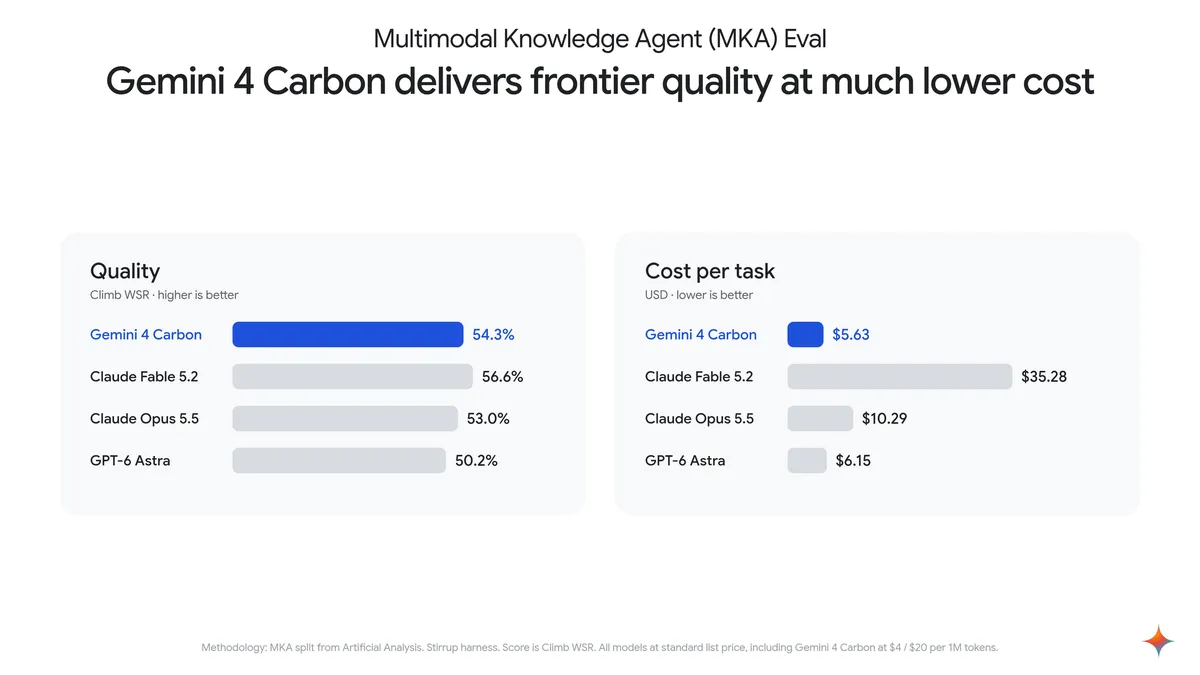
Google and Artificial Analysis built MKA around 200 tasks, 10 fields and 83 occupations. Rubrics weight factual accuracy at 75% and visual design at 25%; models use the same Stirrup harness. MKA methodology
Google’s chart reports 54.3% Climb WSR and $5.63 per task for Carbon, versus 56.6% and $35.28 for Fable 5.2. The chart uses standard list pricing, including $4 / $20 for Carbon.
3. Official examples: drawings and references become 3D projects
Platform 37 reconstruction. Google’s Carbon agent team extracted 206 engineering views from seven planning PDFs and built a 906K-triangle Three.js reconstruction over 10 overnight loops. Official demo
Underwater Atlantis. Using a Gemini Omni video reference, Carbon built ruins, caustics and water simulation in Blender, then converted the environment to real-time Three.js. Official demo
These examples are from Google. Our five tasks below move from a layered object to an animated scene, working webpage, numerical chart and image differences.
4. Handheld: exterior and internal parts
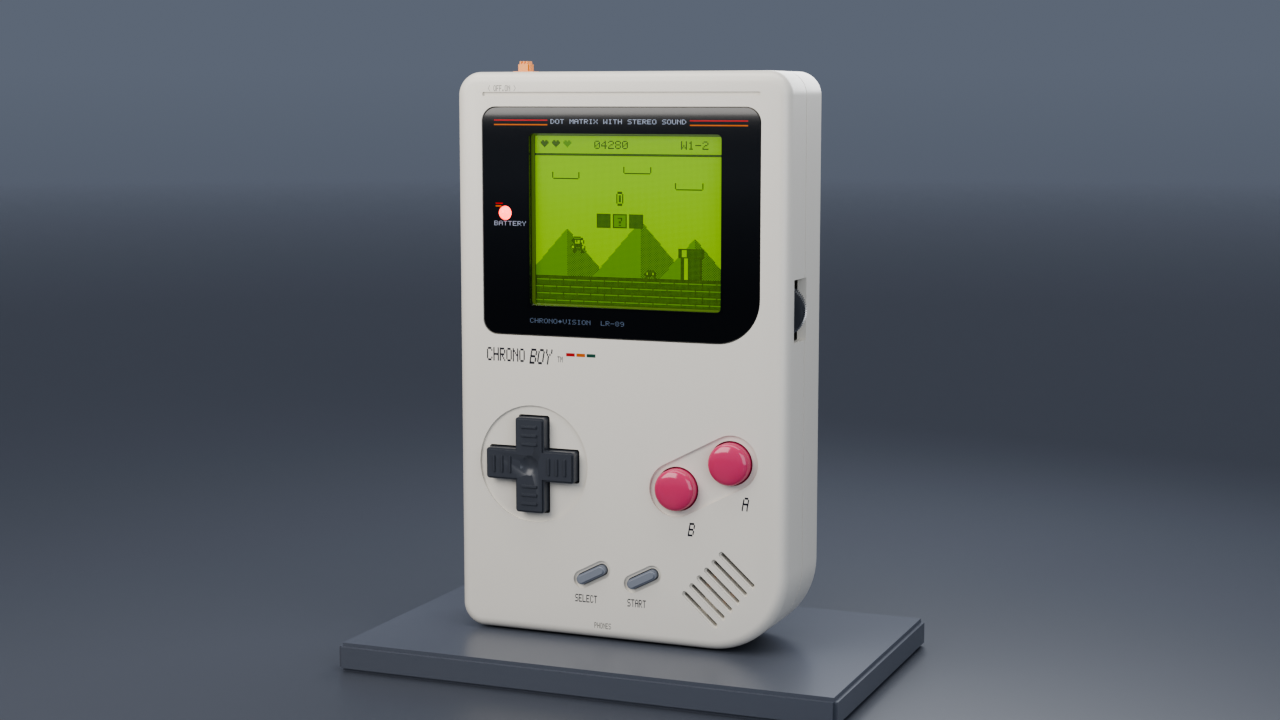
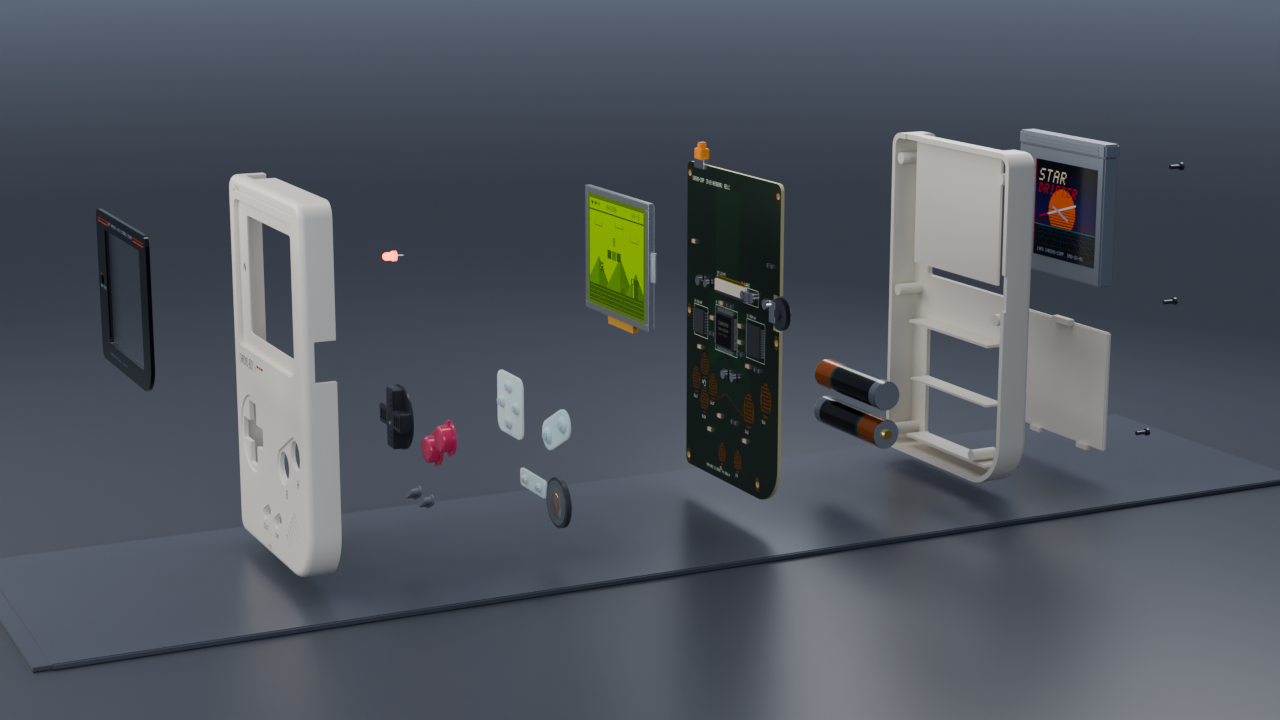
The task asked for an assembled retro handheld and an exploded view. Carbon delivered two Blender projects, two 1280×720 renders and a generation script. The green pixel screen, D-pad, pink buttons and speaker openings are visible.
The exploded view separates the shells, screen, controls, board, batteries and rear cover. All 21 subject meshes have matching names and local mesh hashes across both projects, allowing the same parts to be traced between states.
Before completing the task, the model inspected its renders and revised early shell-face and dark-screen issues. These are its final autonomous deliveries.
5. Underwater laundromat: scene, motion and camera
Carbon placed three washers beneath a striped canopy, with a Chinese sign, tiled floor, drying area, seaweed and distant rocks. Moving light patterns cover the seabed.
In the 12-second video, laundry, fish, jellyfish and bubbles remain in motion. Camera dragging works, and checks at 0, 3, 6, 9 and 12 seconds, then back to 3 seconds, passed.
The same source was recaptured after the scene finished loading, so the complete laundromat is visible from the opening frame.
6. Packing list: three working actions
The page uses a light dotted background, green headings and checklist cards. At both 1440px and 390px widths, it passed adding “umbrella,” checking and unchecking “charger,” and deleting only “camera.”
Blank input is ignored, and a reload restores the three initial items specified by the task. Neither viewport overflows horizontally; the same actions work at phone width.

7. Revenue chart: numbers and geometry agree
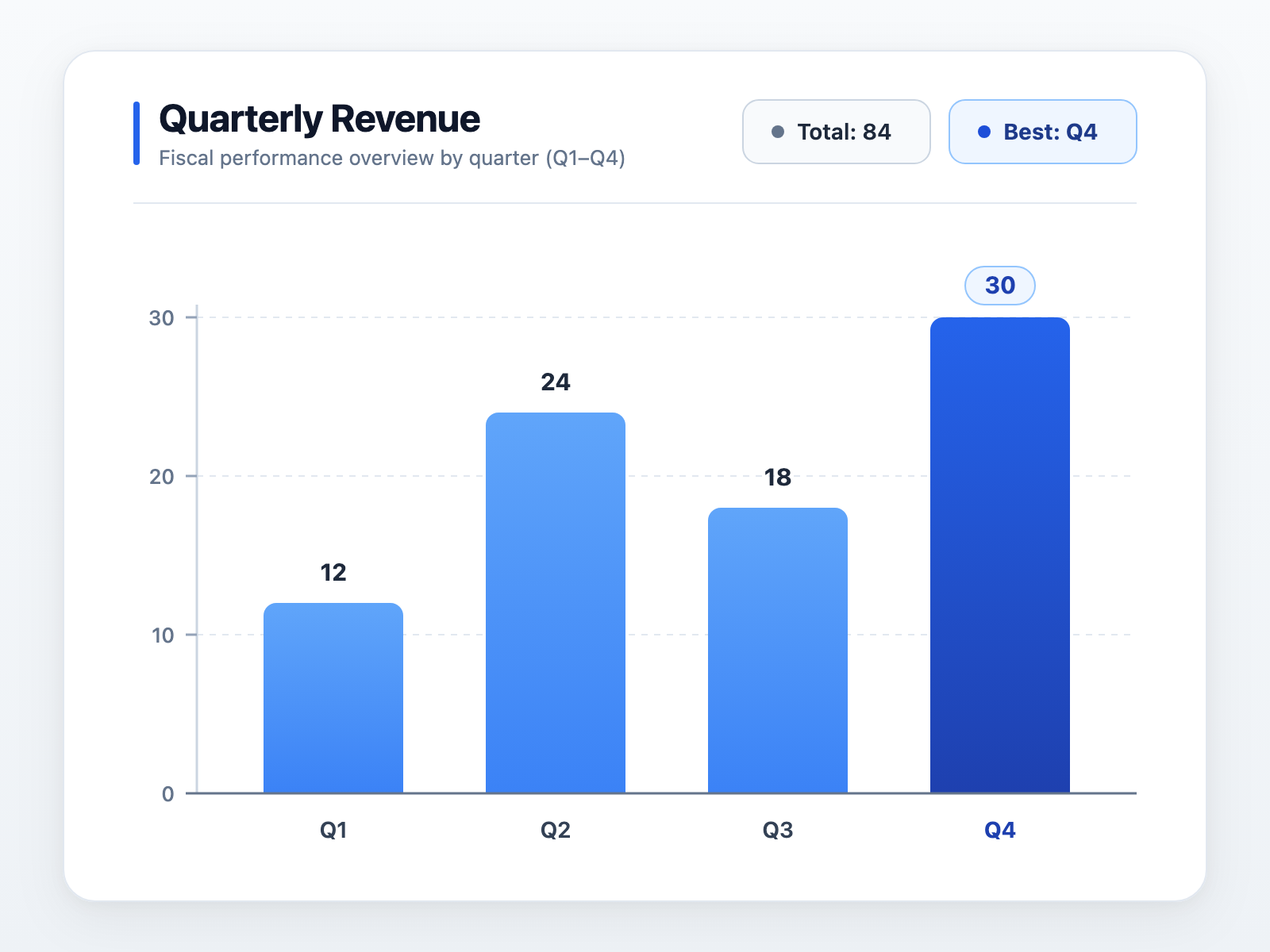
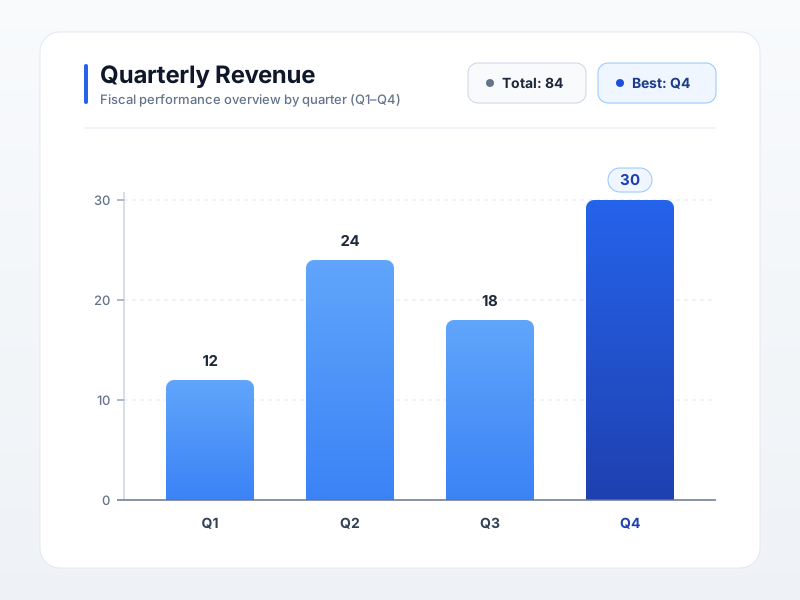
The four quarters read 12, 24, 18 and 30, with a total of 84 and Q4 marked as the best quarter.
All four bars share a baseline. Heights of 120, 240, 180 and 300 pixels give a consistent 10 pixels per unit. The downloadable 800×600 SVG keeps labels, summary and bar values aligned.
8. Image differences: five correct locations and directions
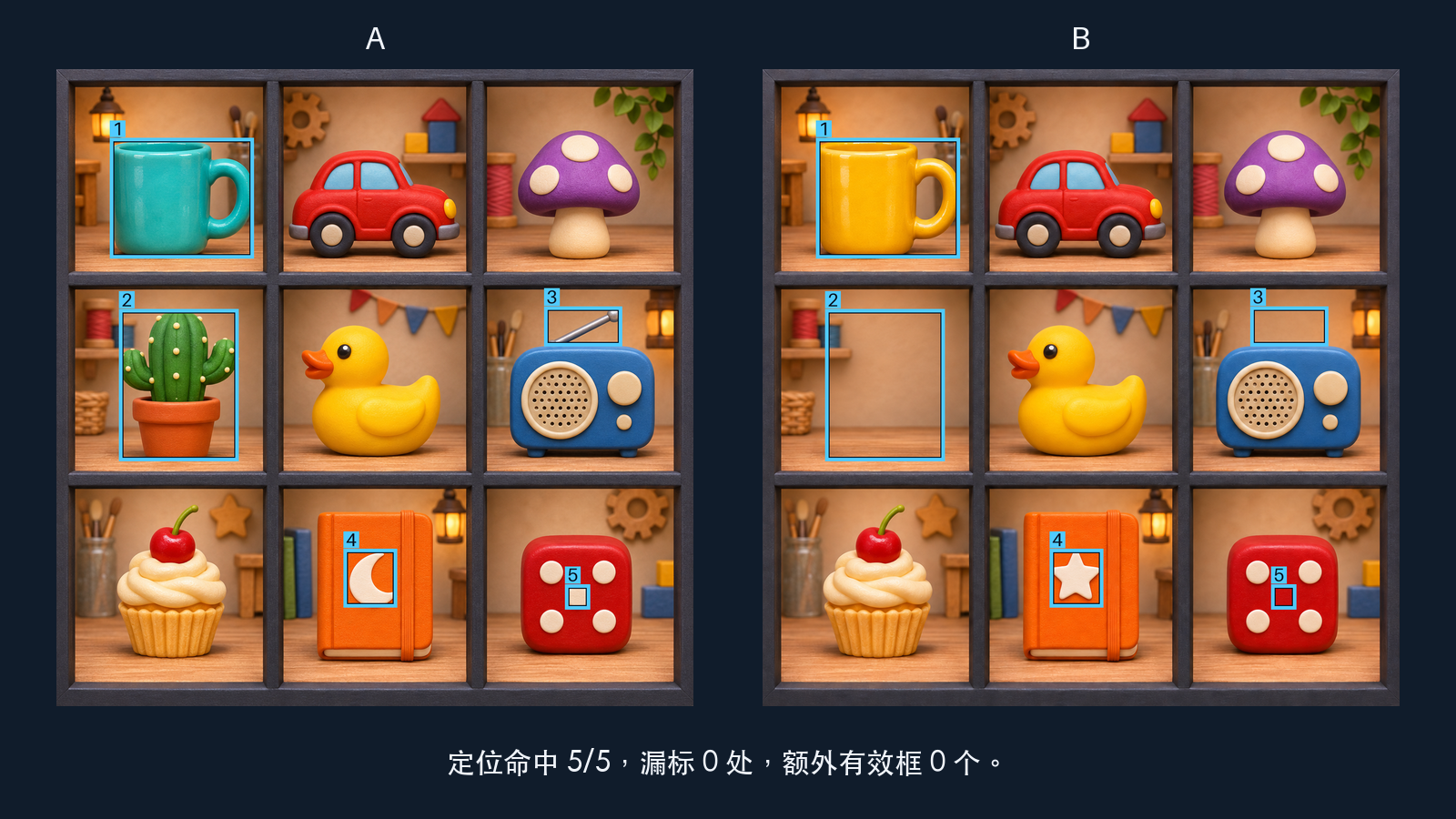
Carbon found all five changes: teal cup to yellow, cactus removed, radio antenna removed, notebook moon changed to a star, and die changed from five dots to four.
Localization scored 5/5, with no missed or extra valid boxes. All five change directions match the images. The answer card places the model’s boxes and descriptions beside the original task for direct inspection.
9. Pricing and recorded usage
As checked on November 17, 2026, standard-tier Gemini API pricing is shown below in USD per million tokens. Official pricing
| Item | Through 2026-11-30 | From 2026-12-01 |
|---|---|---|
| Input | $2 | $4 |
| Output, including thinking | $10 | $20 |
| Implicit cache reads | $0.10 | $0.20 |
We ran the five tasks on November 11, 2026, using Google’s official API, a persistent tool loop and default reasoning. The model could use shell, Blender, browser and image inspection tools, then revise its work. After connection interruptions, the handheld conversation continued through Google’s background API.
Completed responses recorded 5,753,762 input, 206,332 output and 6,055,258 provider-total tokens. Interrupted responses have additional partial records; the complete monetary charge was not returned. Wall time was about 2h 13m 49s, including recovery, rendering and waits. Per-task records and project hashes are downloadable below.
Sources
Google: Gemini 4 Carbon launch
Google: Carbon model documentation
Google: MKA methodology and results
Antigravity: Carbon and /swarm
Task checks, recorded usage and original-file hashes · Gemini 4 Carbon model page